
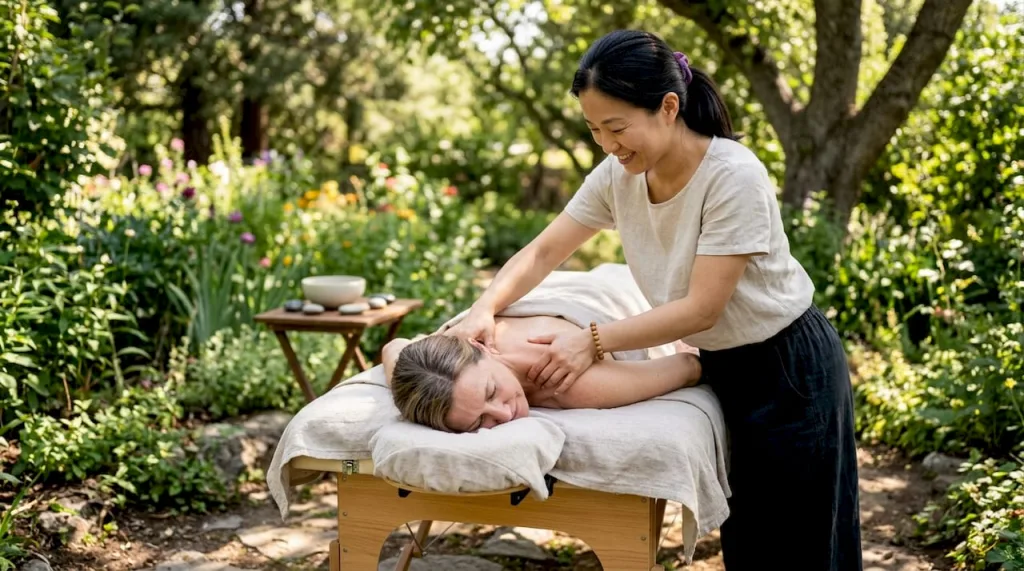
Therapeutic massage for neck tension is the most effective manual treatment for reducing neck pain, providing measurable relief of up to 80% immediately after the session. This result is real but temporary: the effect typically lasts from a few hours up to 4–7 days. To achieve lasting well-being, massage should be combined with posture correction, targeted exercises, and changes in daily habits. This guide explains how it works, which techniques to use, how many sessions are needed, and when it’s best to stop.
How does therapeutic massage help relieve neck tension?
Therapeutic massage works on multiple levels simultaneously: muscular, circulatory, and neurological. Understanding these mechanisms helps you choose the right treatment and set realistic expectations.
On a physical level, massage stimulates blood circulation and improves oxygenation of muscle tissue. The neck muscles—which are often tense for hours due to poor posture or stress—receive more blood and nutrients. This accelerates the elimination of waste products accumulated in tense muscle fibers.
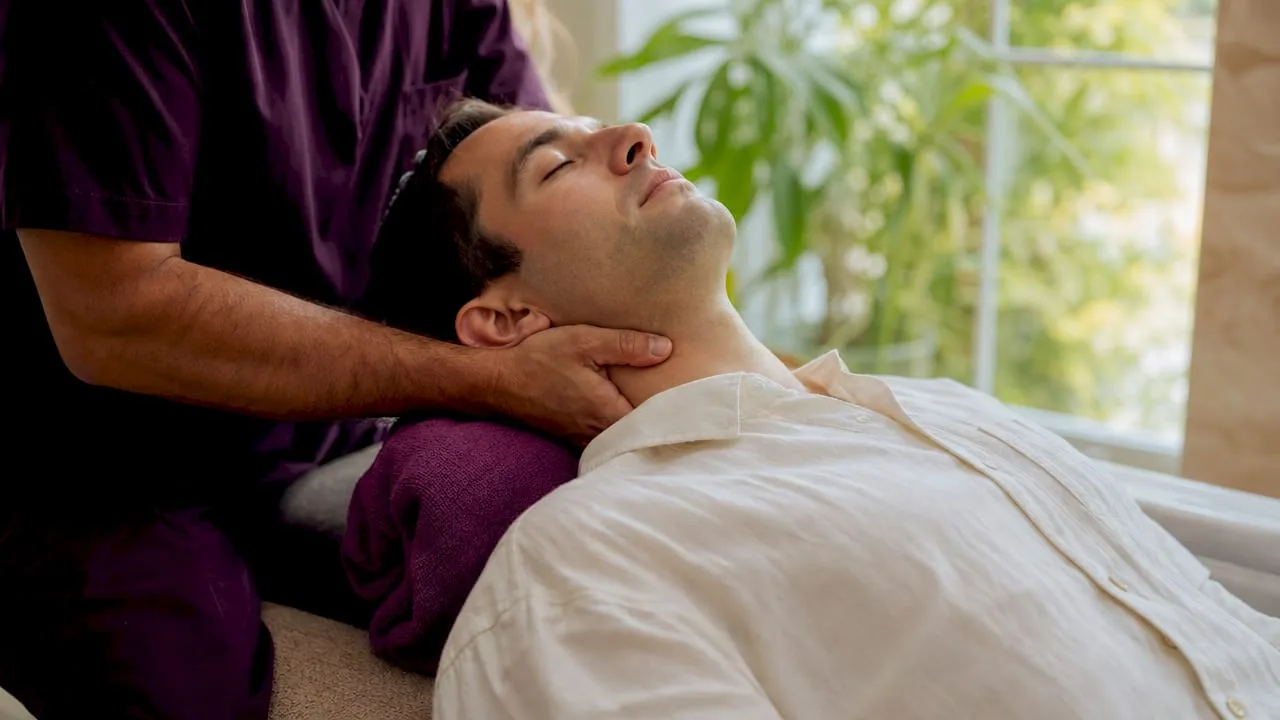
From a neurological perspective, massage activates the parasympathetic nervous system. This system is responsible for rest and recovery: when it is activated, the heart rate slows, muscles relax, and pain perception decreases. This is why, after a session, you often feel calmer—not only physically but also mentally.
Muscle tension is released through gradual pressure applied to points of tension. The muscle responds by relaxing when pressure is applied with the right intensity and for the correct amount of time. The overall effect typically lasts 4–7 days, after which the tension tends to return if the underlying causes are not addressed.
- Circulation: Massage increases local blood flow, reducing inflammation in tight tissues.
- Nervous system: Parasympathetic activation lowers baseline muscle tension and reduces perceived stress.
- Cellular metabolism: Improved cellular exchange accelerates muscle recovery after the session.
- Myofascial release: Pressure applied to trigger points releases muscle knots that cause referred pain in the shoulders and head.
Here’s a tip: After each session, drink at least half a liter of water. The massage helps flush waste products out of your muscles, and staying hydrated helps your body eliminate them more quickly.
Which massage techniques are most effective for the neck and shoulders?
Not all tension-release techniques for the neck area are the same. Each approach has specific indications and should be chosen based on the cause and intensity of the pain.
The three main types
- Relaxation massage: This treatment targets tense muscles directly using deep pressure and slow movements. It is recommended for people who feel like their neck is “stiff” or who have palpable muscle knots. It requires a qualified practitioner, as applying the wrong amount of pressure can make the situation worse.
- Relaxing massage: This technique uses lighter pressure and broad strokes to reduce overall tension. It is suitable for people experiencing tension related to stress and anxiety, without acute muscle spasms. It has an immediate calming effect on the nervous system.
- Anti-stress massage: It combines light stroking, kneading, and pressure on specific points to reduce both physical and emotional tension. It is particularly helpful for people who experience neck tension as a somatic response to work-related or psychological stress.
How to Apply Pressure Safely
The correct pressure is one that remains at 30–40% of the maximum tolerance at each trigger point. Each application lasts 30–60 seconds, followed by a brief pause before repeating. This modulation prevents the muscle from triggering the defensive reflex—the automatic stiffening response that occurs when it perceives a threat.
Massages that are too intense trigger this very defensive response, worsening tension instead of relieving it. Many people believe that “the more it hurts, the better it is” but that’s a mistake. Moderate pressure is more effective because it allows the muscle to relax without resisting.
The most common mistakes to avoid during manual treatment for neck pain are: applying direct pressure to the vertebrae instead of the muscles, working on inflamed or painful areas without a diagnosis, and ignoring the client’s signals of discomfort. A qualified massage therapist knows how to interpret the body’s response and adapts their technique in real time.
A tip: Always I ask how much pain you’re feeling on a scale of 1 to 10. This helps me to adjust the pressure precisely and makes each session more effective.
How many sessions are needed, and how can the treatment be incorporated into your routine?
The number of sessions depends on the duration and severity of the neck problem. There is no one-size-fits-all answer, but there are established protocols that guide treatment planning.
| Type of neck pain | Recommended sessions | Duration of treatment | Recommended supplementation |
|---|---|---|---|
| Recent (acute) | 4–5 sessions | 2–4 weeks | Daily stretching exercises |
| Chronic (recurrent) | Variable | 2–3 months | Postural assessment + strengthening exercises |
| Stress- and anxiety-related | 4–6 sessions | 4–6 weeks | Progressive muscle relaxation techniques |
For recent neck pain, 4–5 sessions are recommended; for chronic neck pain, the treatment course lasts 2 to 3 months. This does not mean you have to wait months to feel improvement: relief comes as early as the first or second session, but stabilization takes time.
Poor posture and structural imbalances in the pelvis and spine are common causes of neck tension. The neck often acts as a compensatory area for misalignments originating further down the body. Treating only the neck without correcting these underlying causes yields only partial and temporary results.
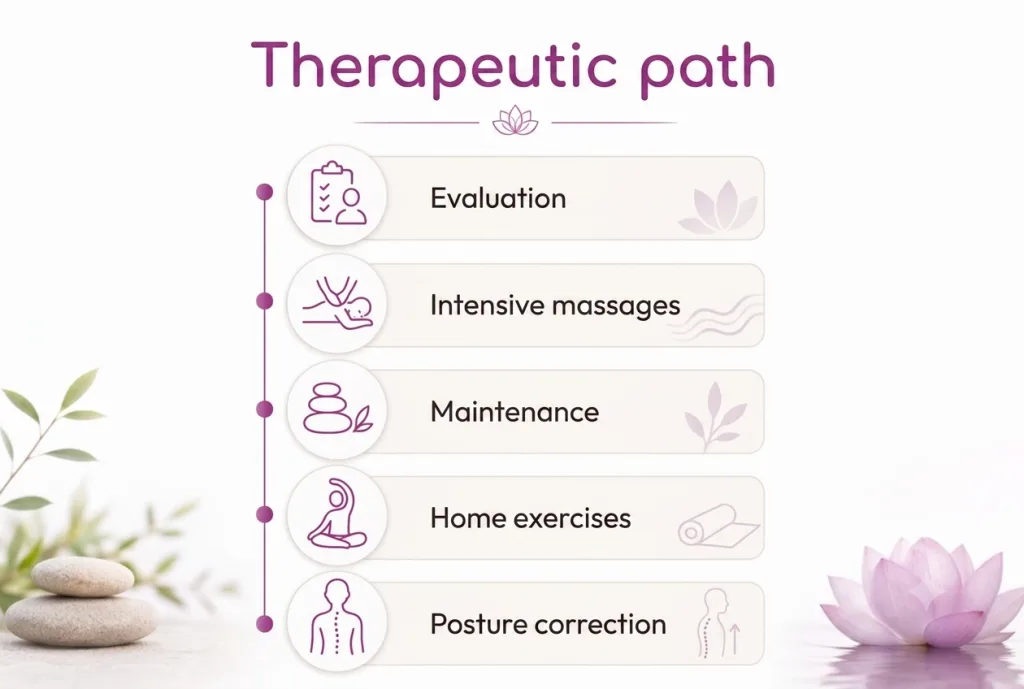
A high-quality therapeutic massage always includes guidance on home exercises and personalized ergonomic adjustments. Without this component, the results remain incomplete. The most helpful exercises to do at home are: lateral neck stretches, slow shoulder rotations, and strengthening the deep neck muscles with isometric movements.
Correcting daily habits is equally crucial. Posture while sitting in front of a screen, sleeping position, and tension built up during phone calls—all these factors contribute to neck tension. Massage relieves the symptom; correct habits eliminate the cause.
When to Avoid Neck Massage: Precautions and Contraindications
Therapeutic massage for the shoulders and neck is safe in most cases, but there are situations in which it is contraindicated or requires a preliminary medical evaluation.
Massage is contraindicated in cases of acute cervical herniated discs, local or systemic infections, severe undiagnosed pain, and urgent neurological symptoms. Before booking a session, these conditions must be ruled out.
Neurological signs requiring immediate attention include: persistent tingling in the arms or hands, muscle weakness in the upper limbs, loss of sensation in specific areas, and pain radiating down the arm. These symptoms may indicate nerve compression, which massage could aggravate.
«Therapeutic massage is a valuable aid in managing neck tension, but it is not a substitute for a medical diagnosis. When pain is severe, persistent, or accompanied by neurological symptoms, the first step is always a specialist evaluation. Only after serious structural causes have been ruled out does massage become a safe and effective tool.»
Massage is a symptomatic treatment, not a standalone therapy. It works best when it’s part of a plan that includes an accurate diagnosis, targeted exercises, and postural adjustments. Consulting a qualified professional ensures that the treatment is tailored to your specific situation, reducing the risk of making the problem worse.
Progressive muscle relaxation is also a useful complement for those who cannot receive massages at certain times: it helps regulate the nervous system and reduces the perception of tension by consciously distinguishing between muscle contraction and relaxation.
Key Points
Therapeutic massage reduces neck pain by up to 80% immediately after the session, but lasting results require an integrated approach that includes postural exercises and adjustments to daily habits.
| Points | Details |
|---|---|
| Immediate but temporary relief | Pain is significantly reduced after the session, but the effect lasts 4–7 days without follow-up treatment. |
| Moderate pressure, not intense | Staying at 30–40% of maximum tolerance prevents the muscle defense reflex and makes the massage more effective. |
| Variable number of sessions | Recent neck pain requires 4–5 sessions; chronic cases require a 2–3-month treatment plan with at-home exercises. |
| Contraindications that should not be ignored | Acute herniated discs, neurological symptoms, and undiagnosed pain require medical evaluation before massage. |
| An integrated approach for lasting results | Massage alone does not correct posture and habits: it should always be combined with exercises and ergonomic guidance. |
Why Massage Alone Isn’t Enough: My Experience in the Field
Every day I work with people who come to me with stiff necks, tense shoulders, and often a sense of fatigue that goes far beyond the physical. What I’ve learned over years of practice is that massage is an extraordinary tool—but only if used the right way.
The most common problem I see is this: someone gets a session, feels great for a few days, then the tension returns. So they book another session, and so on, without ever breaking the cycle. This happens because massage relieves the symptom without addressing the cause. The cause, almost always, is a combination of poor posture, unmanaged stress, and daily habits that repeatedly strain the neck.
What really works is an approach where massage paves the way and exercises maintain the results. After every session, I always give my clients two or three concrete recommendations: a stretch to do in the morning, a posture correction to use while sitting in front of a screen, or a different way to hold their phone. These small changes, when added up, make the difference between temporary relief and real well-being.
Another thing I’ve observed: the people who get the best results are those who treat massage as part of a broader self-care routine, not as a quick fix. They come regularly, communicate how they’re feeling, and actively work on their condition between sessions. The body responds to this attention in surprising ways.
If you’ve been suffering from neck tension for some time, I urge you to stop looking for that “magic” session that solves everything. It doesn’t exist. Instead, there’s a process made up of targeted treatments, listening to your body, and small daily adjustments. That’s what brings about lasting change.
Sidonie
Neck tension? Tuina massage by Sido brings wellness right to your home
Are you looking for real relief from neck tension without having to leave home? Tuina massage by Sido offers in-home Tuina therapeutic massage in Lugano, using an approach that combines tension-release techniques, modulated pressure, and personalized posture guidance. Each session is tailored to you: not a standard treatment, but one adapted to your specific situation.
Tuina massage works deeply on the neck and shoulder muscles, activating the parasympathetic nervous system and promoting genuine recovery. Tuinamassagebysido brings this experience right to your home, eliminating the stress of traveling. To get started or learn more, visit our page on in-home services in Lugano or contact us for a no-obligation consultation.
Frequently Asked Questions
Does therapeutic neck massage really relieve pain?
Yes, therapeutic massage significantly reduces neck pain after just the first session. The effect typically lasts 4–7 days and is reinforced by regular sessions combined with postural exercises.
How many sessions are needed for chronic neck pain?
For chronic neck pain, the recommended treatment plan lasts 2–3 months, with regular sessions and a program of home exercises. Recent cases are generally resolved in 4–5 sessions.
When should you avoid getting a neck massage?
Neck massage is contraindicated in cases of acute herniated discs, infections, undiagnosed severe pain, and neurological symptoms such as tingling or weakness in the limbs. In these cases, a medical evaluation is required first.
Is firm pressure more effective during a massage?
No. Excessive pressure triggers the muscle’s defensive reflex, causing it to tense up even more. Moderate pressure at 30-40% of maximum tolerance produces better and longer-lasting results.
Is Tuina massage effective for neck tension?
Tuina massage targets muscles, energy meridians, and specific points on the body, making it particularly effective for neck and shoulder tension. Tuina massage by Sido offers in-home sessions in Lugano with a personalized treatment plan.